
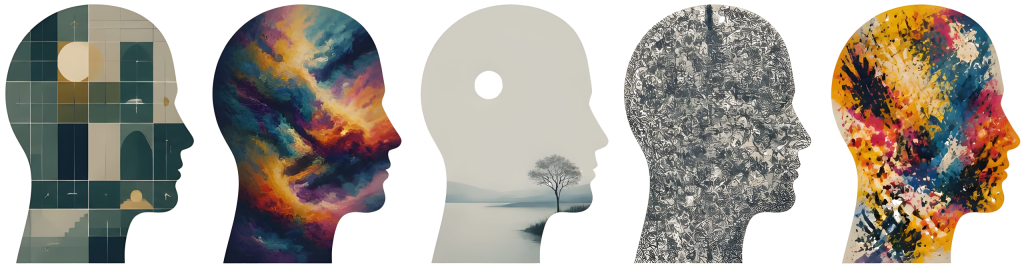
Most people know at least one autistic person, whether or not they have ever put that name to it. The classmate who knew everything about trains. The colleague who is brilliant at one narrow thing and visibly drained by the office open plan. The child who lines up toys with great care and melts down when a routine breaks. These are all glimpses of the same broad category, and yet they can describe lives that look almost nothing alike. That gap, between the everyday word and the enormous variety it covers, is where any honest explanation of autism has to start.
What autism is
Autism, or autism spectrum disorder in clinical language, is a neurodevelopmental condition. It shapes how a person communicates, relates to others, processes the senses, and handles change. It is not an illness that arrives and can be cured, and it is not caused by upbringing. It is a difference in how the brain is wired, present from early in development, that lasts a lifetime.
One point surprises people who expect medicine to work like a lab test. There is no blood marker and no brain scan that confirms autism. The diagnosis rests on observing behaviour and taking a developmental history. Two main systems are used around the world, the World Health Organization’s ICD-11 and the American Psychiatric Association’s DSM-5 with its 2022 revision. They describe two core areas that both need to be present (WHO, Autism Speaks on DSM-5).
The first area is social communication and interaction. This can show up as difficulty with back-and-forth conversation, reduced sharing of interests or emotions, limited use of eye contact and gesture, and trouble building or keeping relationships. The second area is restricted and repetitive patterns. This covers repetitive movements or speech, a strong need for sameness and routine, intense and narrowly focused interests, and unusual responses to sensory input.
That last point, the sensory one, deserves attention because it is easy to miss from the outside. Bright light, certain textures, background noise, or particular smells can be genuinely painful or overwhelming, while other inputs are barely registered. In one review of autistic adults, the large majority reported sensory differences that affected daily life in a meaningful way (PDXScholar). Sensory experience is not always a burden either. Many autistic people actively seek out sounds, textures, or movement that soothe and regulate them, which is part of why a fuller picture treats these traits as differences rather than only as deficits (sensory phenotypes review, 2025).
Why the word covers so many different lives
The single most important thing to understand about autism is that it is a spectrum, and not in the watered-down sense of “everyone is a little bit autistic.” The spectrum is real clinical range.
At one end are people who live independently, hold down demanding work, and pass through the world without anyone noticing anything, sometimes at a heavy hidden cost. At the other end are people who need support with everyday tasks around the clock, who may not use spoken language, and who may also have an intellectual disability. The diagnostic manuals reflect this by describing different levels of support need (CHOP). A substantial share of autistic people also have a co-occurring intellectual disability, which reshapes daily life considerably. So when two people both say they are autistic, they may be describing very different realities, and both are telling the truth.
Part of why the picture is so varied is that autism rarely travels alone. It frequently comes alongside other conditions, including ADHD, anxiety and depression, sleep and gastrointestinal problems, and epilepsy, which occurs far more often in autistic people than in the general population (Scientific American). Each of these adds its own texture to a person’s experience.
There is also the matter of what stays hidden. Many autistic people, women and girls especially, learn to mask. They force eye contact, rehearse conversations in advance, and suppress the small self-regulating movements often called stimming. Masking can be effective enough that a diagnosis does not come until adulthood, and it tends to carry a real toll in exhaustion and mental health (sensory and camouflaging review, 2025). This is one reason the old stereotype of autism as a boys’ condition has been slowly falling apart.
Alongside the challenges sit genuine strengths, and leaving them out would give a false picture. Strong pattern recognition, deep and sustained focus, an unusual eye for detail, and directness are common threads (Scientific American). The idea of neurodiversity, coined in the late 1990s, grew out of exactly this point, that these neurological differences are part of natural human variation and not simply defects to be erased.
For a lot of people the whole idea of autism comes from a single film, so one stubborn myth is worth clearing up. In Rain Man, Dustin Hoffman played a character with an astonishing memory for numbers, and audiences came away assuming that autism arrives with a hidden talent attached. It usually does not. The striking feats of memory or calculation known as savant skills appear in only around one in ten autistic people by the most commonly cited estimate, which leaves the large majority without any such ability (Neurology Today, on Treffert’s figure). There is a further twist. The character was inspired by Kim Peek, a man with a remarkable memory who, as it later turned out, was not autistic at all but had a different condition called FG syndrome (PsychCentral). The film built a lasting stereotype out of someone who did not fit the label it made famous.
How common it is, and why the number keeps rising
Worldwide, the best current estimate is that around 1 in 100 children is autistic, the figure the WHO cites, while the Global Burden of Disease study for 2021 put it at roughly 1 in 127 people across all ages, or about 62 million people (WHO, Lancet Psychiatry). These are averages, and the numbers swing widely between countries. Some Nordic studies report notably higher rates, while many low- and middle-income countries report far lower figures, mostly because the diagnostic infrastructure to identify autism simply is not there.
Reported prevalence has climbed almost everywhere over the past few decades, and headlines sometimes present this as an epidemic. The more grounded reading is that most of the rise comes from better recognition, broader diagnostic criteria, and more children in previously overlooked groups finally being identified (global prevalence review). The number reflects how we count as much as how many there are.
What is actually known about causes
Here honesty matters more than tidiness. There is no single cause of autism, and anyone promising one is selling something. What the evidence supports is that autism is strongly genetic, with heritability estimates commonly placed somewhere between 40 and 80 percent, and that many genes each contribute a small amount, interacting with events during early development.
The genetic map has been filling in fast, and more than two hundred genes are now treated as high-confidence risk genes, with many more under investigation (brain organoid review, 2025). The trend runs away from any hunt for “the autism gene” and toward large networks of small effects. Large collaborative efforts have grown up around this, including the European Autism GEnomics Registry, which is pooling whole-genome data and detailed profiles across multiple countries to connect genetics with real-world outcomes (EAGER protocol).
This is the puzzle that ties the whole field together. If hundreds of different genes, plus environmental factors, can all lead to something we recognise as autism, then how do so many different starting points end up in a similar place? Much of the most interesting current work is chasing that question, looking for the junctions where different causes meet.
The research currents worth watching
The study that prompted this piece is a good example of that junction-hunting, and it is recent, published in Molecular Psychiatry in February 2026 (paper, PsyPost summary). Working in mice, the researchers followed a chemical chain in which too much of a brain signalling gas, nitric oxide, attaches to a protein called TSC2. Think of TSC2 as a brake on a cellular growth and protein-building system called mTOR. When nitric oxide tags the brake, the cell destroys it, the brake is gone, and mTOR runs hot. Blocking the enzyme that makes the gas restored the brake and eased autism-like behaviour, and a version of the brake engineered to resist the tag did the same. Plasma from autistic children, including some with SHANK3 mutations, showed the matching pattern. What makes it notable is that two different autism-linked genes both funnelled into the same overheated pathway. Two roads, one junction.
That convergence idea is showing up from several directions at once, which is what makes this moment feel alive rather than scattered.
A stem-cell study published in Nature in early 2026 grew tiny lab-made brain models, called cortical organoids, from people carrying eight different rare autism mutations, as well as from people with idiopathic autism. Early in development each mutation produced its own pattern, but as the neurons matured the patterns began to overlap, as though different starting points were drifting toward a shared destination (Nature, summary). European research groups have been central to this organoid approach, including a system built to screen many autism genes at once inside a single lab-grown tissue (overview).
Pulling in the other direction, and just as important, is the growing case that autism may not be one condition at all. A large international collaboration, published in Nature Neuroscience in May 2026, used brain-connectivity patterns compared across species to identify distinct autism subtypes (SciTechDaily summary). If that holds up, the future may involve several autisms, each with its own biology, rather than a single label stretched over everyone. That sits in productive tension with the convergence work, and the field will spend years sorting out how both can be true.
The overlap between autism and epilepsy is drawing fresh attention too. One group traced autism-like behaviour in a mouse model to overexcitability in a specific brain region and found that an experimental seizure drug reversed the behaviour, a hint at where the biology of the two conditions may share ground (study summary). The same mouse model, Cntnap2, also appears in the nitric oxide study above, a small sign of how these threads keep crossing.
A study published in June 2026 found that epigenetic patterns present at birth are linked to how gut bacteria develop in infancy, with specific patterns tied to signs of autism and ADHD (ScienceDaily). It is early, but it widens the frame beyond genes alone.
What stands out across all of this is how distributed it is. The work spans many countries and is often stitched together through shared data initiatives rather than resting with any single lab or place. Autism research is a genuinely international effort, and that is one of its quiet strengths.
A note on why I follow this
I am not a researcher, and nothing here is medical advice. My interest in how autism research develops is a professional one, and I try to keep up with where the science is heading rather than where the headlines are. What draws me to this particular moment is the pattern I have described. Several independent teams, using very different methods, seem to be circling the same question from opposite sides, whether the many roads into autism eventually meet at a few shared junctions, or whether we are really looking at several distinct conditions wearing one name. The nitric oxide study is one small, careful attempt at an answer, and it is worth watching what the next few years do with it.
For anyone who wants to keep following along, ScienceDaily runs a live-updating page of autism news that is worth bookmarking rather than citing, since its content changes over time: https://www.sciencedaily.com/news/mind_brain/autism/
Sources
- WHO, autism fact sheet (definition and global prevalence). https://www.who.int/news-room/fact-sheets/detail/autism-spectrum-disorders
- Global Burden of Disease Study 2021, Lancet Psychiatry (worldwide prevalence and burden). https://www.thelancet.com/journals/lanpsy/article/PIIS2215-0366(24)00363-8/fulltext
- Global prevalence of autism, systematic review update. https://pmc.ncbi.nlm.nih.gov/articles/PMC9310578/
- Autism Speaks, DSM-5 diagnostic criteria. https://www.autismspeaks.org/autism-diagnostic-criteria-dsm-5
- Children’s Hospital of Philadelphia, DSM-5 criteria and support levels. https://www.research.chop.edu/car-autism-roadmap/diagnostic-criteria-for-autism-spectrum-disorder-in-the-dsm-5
- Scientific American, on neurodiversity, strengths, and co-occurring conditions. https://blogs.scientificamerican.com/observations/the-concept-of-neurodiversity-is-dividing-the-autism-community/
- Sensory differences in autistic adults (literature review). https://pdxscholar.library.pdx.edu/mcnair/vol13/iss1/11/
- Sensory phenotypes in ASD, state-of-the-art review (2025). https://www.ncbi.nlm.nih.gov/pmc/articles/PMC12839194/
- Sensory and camouflaging differences, including in autistic women (2025). https://pmc.ncbi.nlm.nih.gov/articles/PMC12034742/
- Savant skills in roughly one in ten autistic people (Treffert estimate), Neurology Today. https://neurologytoday.aan.com/doi/10.1097/01.NT.0000368614.59951.d2
- Autism and savant syndrome, including Kim Peek and FG syndrome, PsychCentral. https://psychcentral.com/autism/savant-autism
- Ojha et al., nitric oxide, TSC2 and mTOR in autism models, Molecular Psychiatry (Feb 2026). https://doi.org/10.1038/s41380-026-03514-6
- PsyPost coverage of the nitric oxide study. https://www.psypost.org/blocking-a-common-brain-gas-reverses-autism-like-traits-in-mice/
- Developmental convergence in human stem cell models of autism, Nature (2026). https://www.nature.com/articles/s41586-025-10047-5
- Plain-language summary of the organoid convergence study. https://www.technologynetworks.com/genomics/news/different-autism-mutations-can-lead-to-similar-brain-changes-408990
- Single-cell brain organoid screening for autism genes. https://www.genengnews.com/topics/omics/single-cell-organoid-screens-illuminate-autism-genetics/
- Autism subtypes via cross-species connectivity, Nature Neuroscience (May 2026, international collaboration). https://scitechdaily.com/a-surprising-discovery-suggests-autism-is-not-one-condition/
- European Autism GEnomics Registry (EAGER), study protocol. https://www.medrxiv.org/content/10.1101/2023.10.10.23296834v1.full.pdf
- Reticular thalamic overexcitability and the autism-epilepsy overlap, Science Advances. https://www.sciencedaily.com/releases/2025/09/250907172644.htm
- Epigenome-microbiome interplay in early life and links to autism and ADHD, ScienceDaily coverage of Cell Press Blue (June 2026). https://www.sciencedaily.com/releases/2026/06/260602021645.htm
- Brain organoid modeling in autism, review (2025). https://www.sciencedirect.com/science/article/pii/S0959438825000613